Historical place in Bangladesh
The land of natural beauty is our evergreen Bangladesh. There are many places of interest in this country. People from all over the world come to see this beauty. We have even made a list of things to do in Dhaka City as well. Now, let’s find out about the country’s top places of interest.
❑ Paharpur Buddhist Monostery:
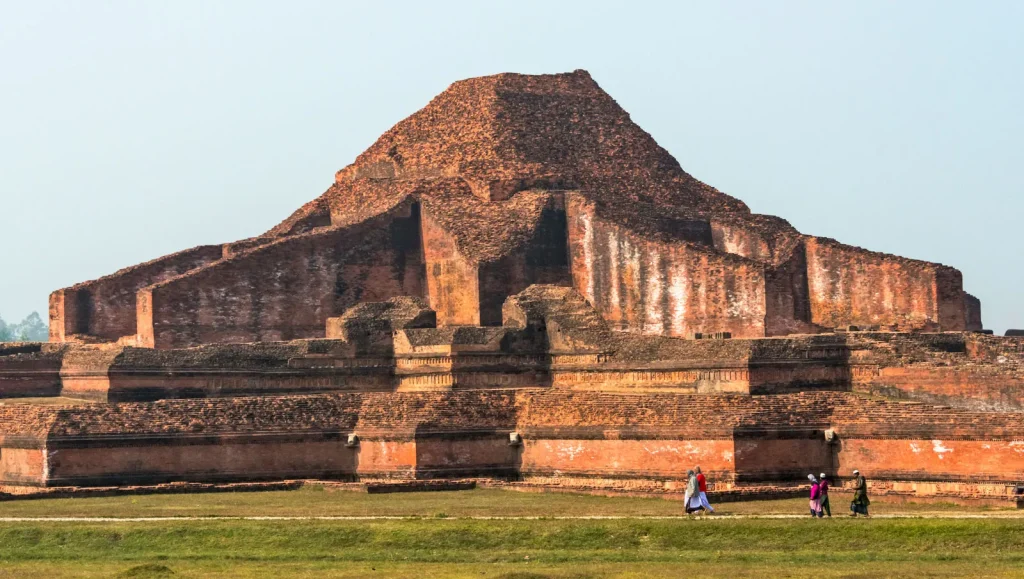
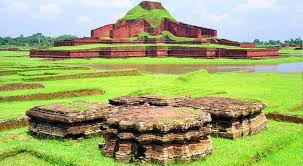
Paharpur became one of the most significant intellectual centers in the region. Located in the northwest corner of Bangladesh, Paharpur is reputed to be the second-largest Buddhist monastery south of the Himalayas, with the Ruins of the Buddhist Vihara dating back to the 8th century. Inscribed as a UNESCO World Heritage Site in 1985 and formerly known as Somapura Mahavihara, the Ruins of the Buddhist Vihara is considered one of the most important archaeological sites in the country and is commonly cited as a key example of pre-Islamic Bangladeshi architecture.
❑ Kantaji Temple :
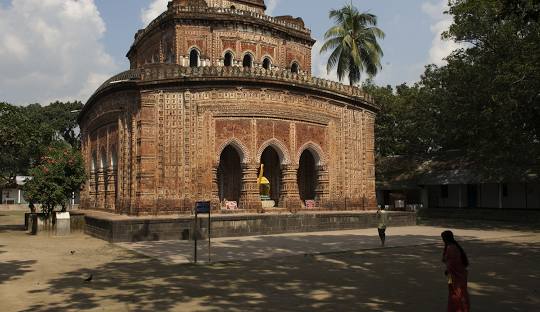
This magnificent terracotta Hindu temple stands in Dinajpur, Bangladesh. Maharaja Pran Nath, a ruler of the region, founded this temple in the late 18th century. The construction ended in 1722 during the reign of his son Raja Ramnath. The temple is renowned for its intricate terracotta ornamentation. Today, it attracts both local devotees and tourists who admire its exquisite craftsmanship. Surrounding the temple, there are serene gardens and a large pond, creating a picturesque ambiance for visitors to explore. Today, the fort stands as a historical landmark, attracting both locals and tourists. Visitors can explore its impressive structures, such as the Diwan-i-Aam (public audience hall), the tomb of Pari Bibi, and the mosque of Shaista Khan.
❑ Mahasthangarh:
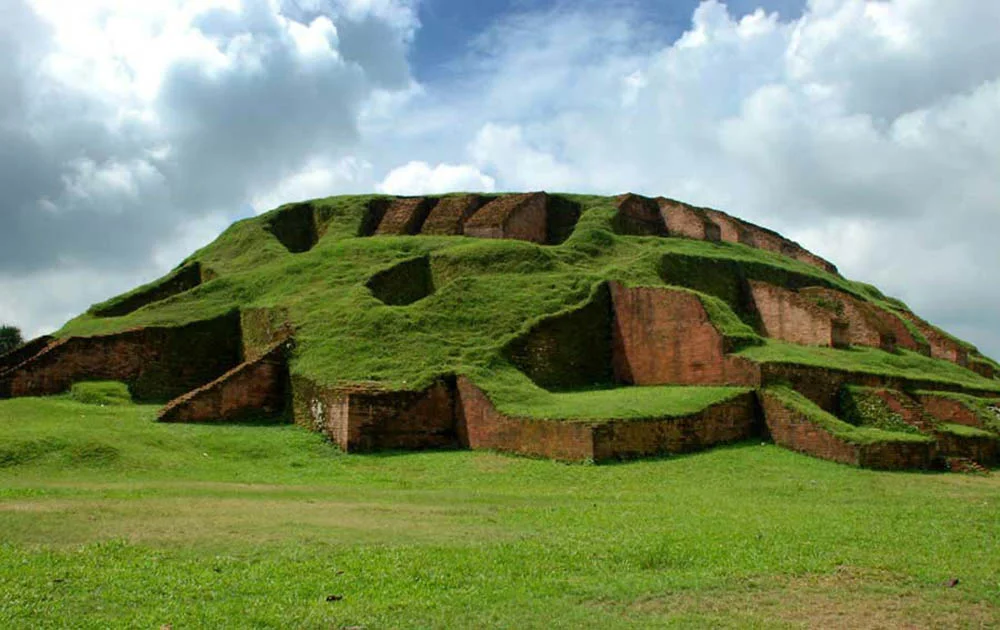
The oldest fortification and archaeological site is Mahastangarh. It served as the ancient Persian kingdom’s capital. It was constructed in the third century BC and is today revered by Muslims, Buddhists, and Hindus. The site’s antiquities, which are housed in a tastefully furnished site museum, ranged from clay items to gold jewelry and coins.
❑ Lalbagh Fort:
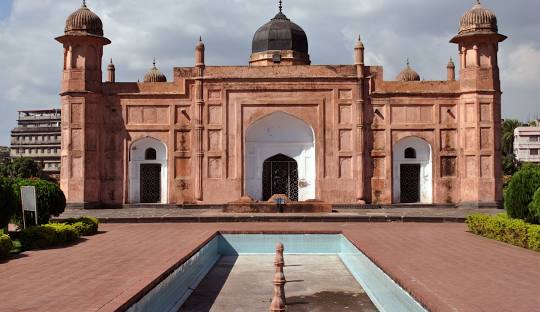
Lalbagh Fort, located in Old Dhaka, was founded in 1678 during the Mughal era by Prince Muhammad Azam, the son of Emperor Aurangzeb. The fort showcases a magnificent blend of Mughal and local architectural styles. Azam, who later became the Mughal Emperor for a very brief period, stayed in Bengal for 15 months. When the prince was called away by his father, Aurangzeb, the fort’s construction was overseen by Shaista Khan. Lalbagh Fort has witnessed several historical events, including the uprising against the British in 1857 and the anti-British movements of the early 20th century.
❑ Ahsan Manzil:

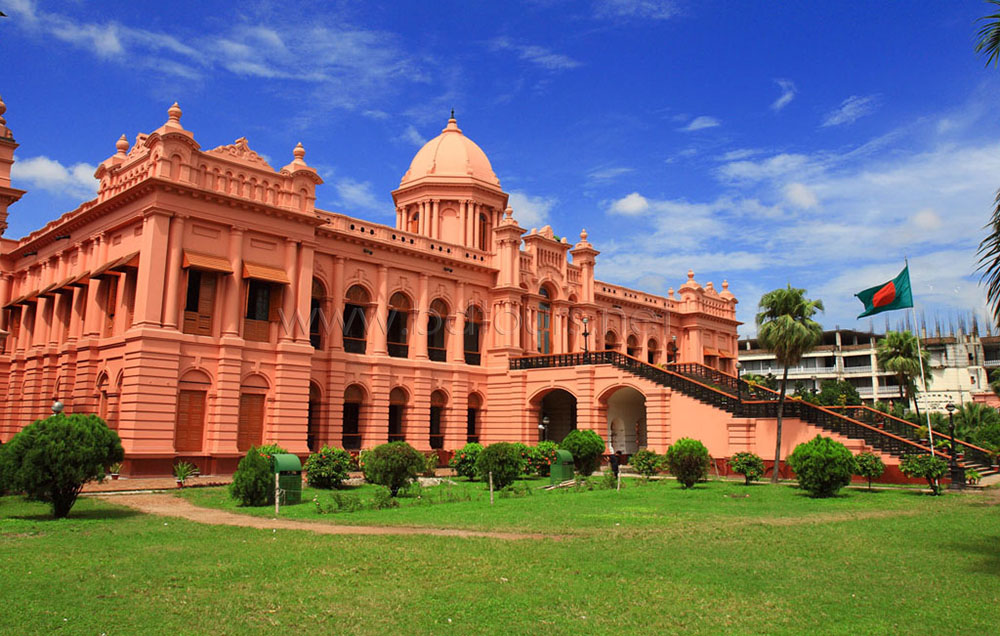
Ahsan Manzil is a majestic palace located in Old Dhaka. It was completed in 1872 and served as the official residence of the Nawabs of Dhaka during the British colonial period. Ahsan Manzil witnessed significant historical events, including the anti-British movements and the partition of Bengal in 1905. Today, it stands as a museum showcasing the lifestyle, artifacts, and history of the Nawabs. Visitors can admire the palace’s distinctive pink facade, explore the grand halls, and enjoy the panoramic view of the Buriganga River from its balcony.
❑ Sixty Dome Mosque :
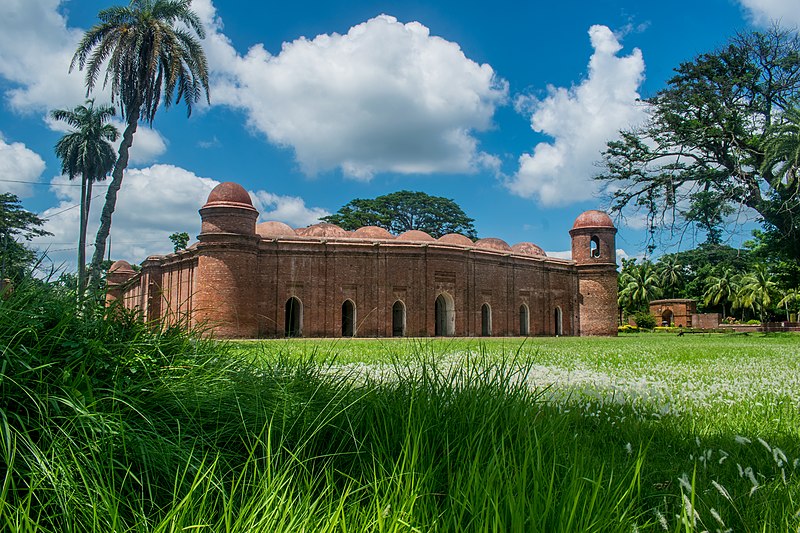
Shait Gambuj Mosque, or the Sixty Dome Mosque, was founded in the 15th century during the Bengal Sultanate by Khan Jahan Ali, a Muslim saint and ruler. The construction was completed in 1459. Designated a UNESCO World Heritage Site in 1985, this mosque stands at Bagerhat as a testament to the rich architectural heritage of the region. The mosque’s remarkable structure features sixty domes, sixty stone pillars, and intricate terracotta ornamentation. Visitors can explore the beautifully designed prayer hall, stroll through the lush gardens, and immerse themselves in the spiritual atmosphere of this historical site.
❑ Puthia Temple :
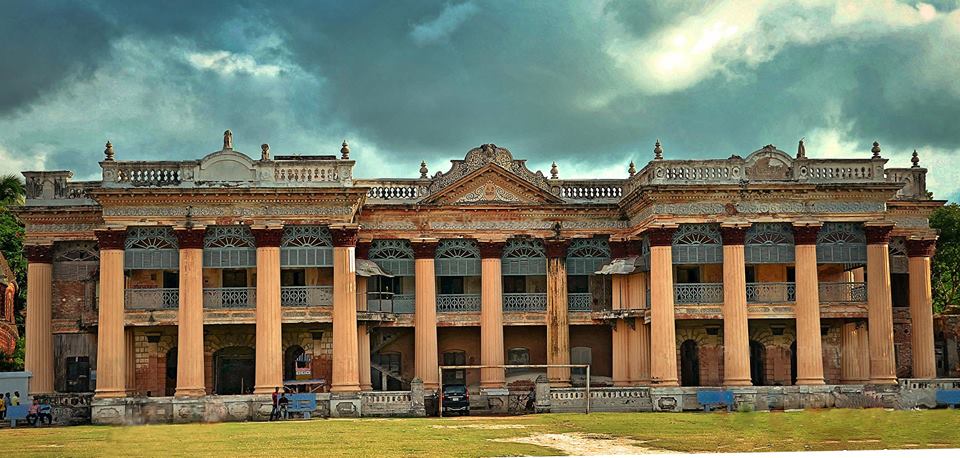
The complex is located in Rajshahi district’s Puthia upazila. A collection of noteworthy ancient Hindu temples can be found within this expansive temple complex. The temples combined Jor-Bangla architecture with a variety of other influences and were constructed in terracotta in a variety of forms. The first structures in the complex date to the 16th century, and it was expanded over several decades. The Puthia Raj family, local zamindars (landlords) who supported the arts and culture, were principally responsible for its construction.
❑ Atia Mosque:

Atia Mosque is a 17th-century mosque located at Delduar Upazila under the district of Tangail. Atia Jame Moshjid is another name for the mosque. During the Mughal Empire, it was constructed. Local historians and representatives of the archaeology department claim that the mosque was constructed around 1609 after Zamindar Syed Khan Panni acquired Atia Pargana as a gift from Mughal Emperor Jahangir in the early 17th century. The mosque is just 3.7 miles (six kilometers) south of Tangail City. An inscription (now housed in the Bangladesh National Museum) states that Sayeed Khan Panni, son of Baizid Khan Panni, built the mosque in honor of Shah Baba Kashmiri between 1610 and 1611, during the reign of Emperor Jahangir. This region was home to the well-known Bengali Sufi mystic Shah Baba Kashmiri. Pre-Mughal and Mughal influences are combined in the mosques.
❑ Goaldi mosque :
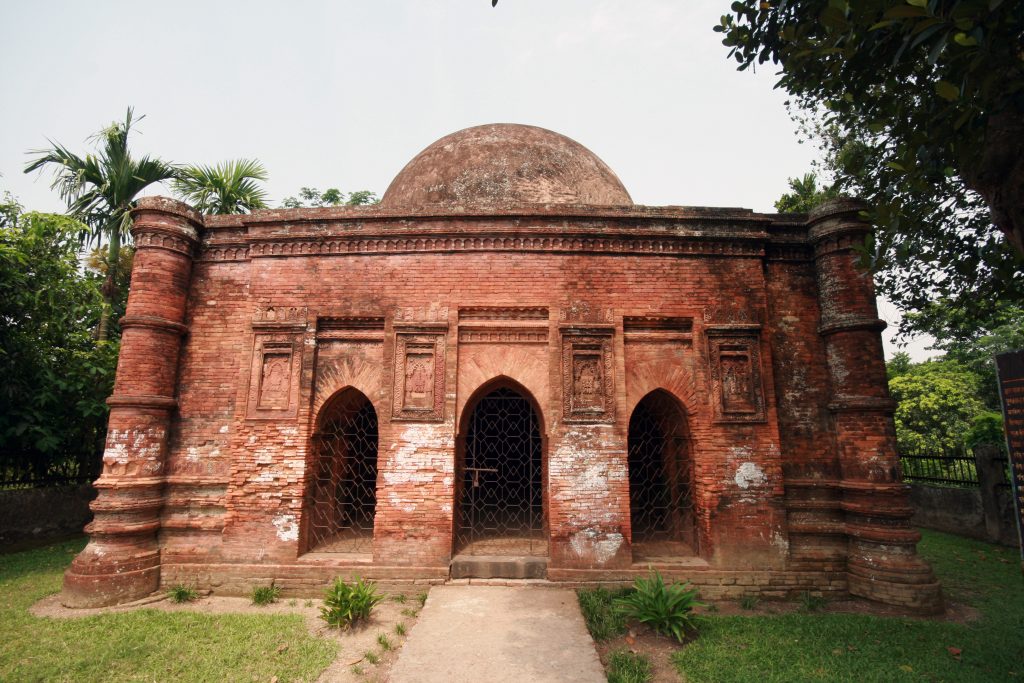
Goaldi Mosque is built in 1705 by Abdul Hamid during the reign of Mughal emperor Aurangzeb. The graceful, single domed Goaldi Mosque is the most impressive of the few extant monuments of the old capital city Sonargaon and a good example of pre-Mughal architecture. The mosque was established in 1519. It was built by Mulla Hizabar Akbar Khan during the reign of Sultan Alauddin Husain Shah of Bengal at a place called Goaldi – half a mile northeast of Panam village in Sonargaon. Sonargaon was a Mint Town of the Bengal Sultanate and often served as a royal capital.
❑ Bagha Mosque :
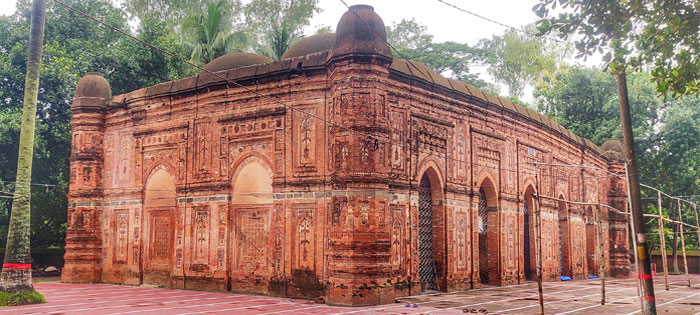
Bagha Mosque is a historical mosque located in Bagha, a small town in the Rajshahi district. The mosque was constructed in 1523 during the reign of Sultan Nusrat Shah, a ruler of the Husain Shahi dynasty. The mosque is known for its impressive terracotta decoration, featuring intricate floral and geometric patterns.
❑ Choto Sona Mosque :
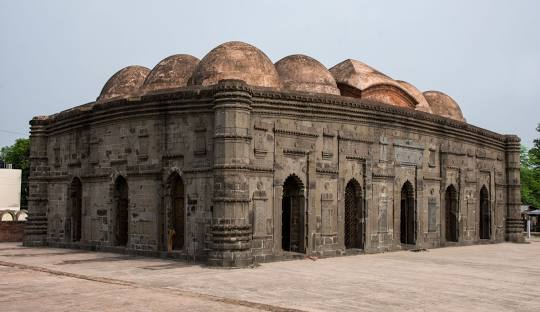
Dating back to the 16th century, Choto Sona Mosque is an architectural gem located in Chapainawabganj district of Bangladesh. The mosque was constructed between 1493 and 1519, during the reign of Alauddin Husain Shah, the Sultan of Bengal. The mosque exhibits a fusion of Bengali and Turkish architectural styles,characterized by intricate terracotta ornamentation, delicate mihrab designs, and unique brickwork patterns. Despite the passage of time, the mosque has managed to retain its grandeur and historical charm. Visitors can marvel at the architectural details and experience the spiritual ambiance within the serene surroundings of the mosque.
❑ Tajhat Palace :
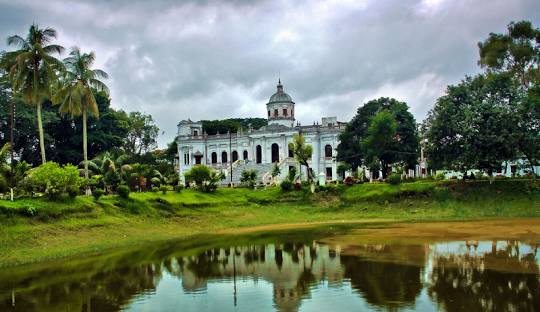
Constructed in the 20th century, this magnificent historical palace was built by Maharaja Kumar Gopal Lal Roy, a prominent landlord of the region, during the British colonial period. Located at Tajhat in Rangpur district, the palace exhibits exquisite architectural features, blending influences from both the European and Mughal styles. Currently, Tajhat Palace serves as a museum, preserving and showcasing various artifacts, antique furniture, and handicrafts that reflect the cultural heritage of the region. Visitors can admire the intricate woodwork, ornate ceilings, and well-preserved interior decor. The palace gardens surrounding the building provide a serene and picturesque setting for visitors to explore.
❑ Baliati Zamindar Bari :
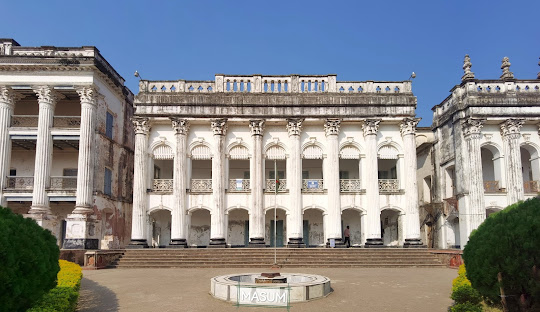
Baliati Zamindar Bari is located at the village of Baliati, in Saturia Upazila of Manikganj District. The palace is situated on a lush and sprawling premise, approximately 16,000 square meters. Backside of the palace has a pond having four ghats. It is one of the finest specimens of the 19-century monuments of the renaissance colonial style in Bangladesh. The founder of the Baliati Zamindar was one Govinda Ram Shaha, who was a big salt merchant, built the Complex (Bari). This remarkable complex has been accused by the Bangladesh Archeological Department in 1987 and has been given a new name “Baliati Palace” as protected cultural property.
The contribution of the zamindars of Baliati in the history of antiquities of Manikganj district is noteworthy. The zamindars of Baliati have left a legacy of more than a hundred years from the first half of the nineteenth century to the first half of the twentieth century which has especially enriched the antiquities of the district. The name of Baliati spread in the country and abroad through Vrindavan Chandra Roy Chowdhury and Jagannath Roy Chowdhury, the two sons of Nityananda Roy Chowdhury, the zamindar of Pathan Bari.
❑ Panam City :
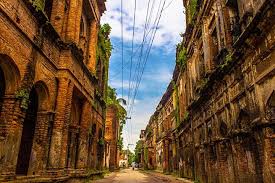
Panam City, known as the lost city an archaeological site in Bangladesh situated at Sonargaon Upazila of Narayanganj District You will be astonished to know that the structures are older than around years. This is called the oldest capital of Bengal and the ancient silk road from the Bengal delta to China and Central Asia.
Sonargaon, the city of Isa Khan, the Bengali monarch of the fifteenth century, was once a major political and commercial hub and features buildings from the Sultanate, Mughal, and colonial eras. The Sonakanda River Fort, the Panch Pir Mazar Shrine, and Ibrahim’s and Abdul Hamid’s Mosque are some of the Mughal landmarks found in the Sonargaon historic city, which is close to the modern-day metropolis of Dhaka. The Ananda Mohan Piddar House and adjacent street-front homes are examples of British colonial architecture that has been preserved in Sonargaon. Sonargaon was the last stop on the Grand Trunk Road, which stretches 2,500 kilometers from Peshawar in the Hindu Kush. The site is at risk from unlawful development, flooding, vandalism, and unauthorized occupation, among other things.
❑ Shalban Bihar :
This is one of the Buddhist sites of the Mainamati ruins. It is read that Mainamati had been a Buddhist center between the seventh and twelfth centuries. This site was built during the reign of the Deva Dynasty by Bhava Deva, the fourth ruler. The authentic color of the building is flame-like and was able to be the dwelling place of 115 monks together. It was previously known as Shalban Rajar Bari, but after the archaeological survey, it had been known as a Buddhist monastery. When the excavation of terracotta and copper art work was discovered, it was then named Shalban Bihar. It is one of the prestigious Buddhist monasteries that had a glorious presence from the early eighth century. Some valuable excavations from this place are kept in the Mainamati Museum.


 2 Nights - 3 Days