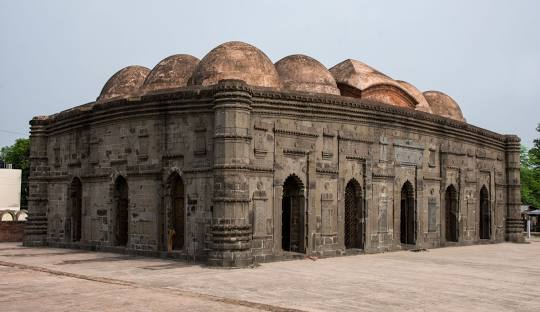
Choto Sona Mosque in Chapainawabganj
Choto Sona Mosque is one of the most remarkable historical mosques in Bangladesh and one of the finest examples of Sultanate-era architecture in the country. Located in the historic Gaur region of Chapainawabganj, this centuries-old mosque attracts visitors with its beautiful stonework, elegant domes, detailed carvings, and fascinating history. Also known as Choto Shona Masjid or the Small Golden Mosque, the monument is an important destination for travelers interested in history, architecture, culture, and the heritage of medieval Bengal.
History of Choto Sona Mosque:
Choto Sona Mosque was built during the reign of Sultan Alauddin Husain Shah, between 1493 and 1519 AD, when the Bengal Sultanate was an important political and cultural center of the region. Historical records and an inscription associated with the mosque identify Majlis Mansur Wali Muhammad bin Ali as its patron. The mosque is located in the historic area of Gaur, an ancient city that was once an important center of Bengal. The surrounding region contains several archaeological monuments that reflect the rich history of the Bengal Sultanate.
The mosque is famous for its original 15 domes, which were once covered with a thin layer of gold. This golden decoration gave the mosque its name, Choto Sona Mosque, meaning “Small Golden Mosque.” The original gilding no longer remains today.
Architecture of Choto Sona Mosque:
The architecture of Choto Sona Mosque is one of its biggest attractions. The mosque combines brick construction with beautifully carved stone, creating an impressive appearance that reflects the artistic traditions of the Bengal Sultanate.
The mosque originally had 15 domes arranged across the roof. The structure also features beautifully designed arches, stone pillars, decorative panels, and ornate details. Some important architectural features include:
🔹 15 original domes
🔹 Beautiful stone-covered walls
🔹 Five arched entrances on the eastern side
🔹 Additional entrances on the north and south sides
🔹 Decorative stone carvings
🔹 Beautiful mihrabs
🔹 Four corner towers
🔹 Traditional Bengal Sultanate architectural elements
Why Is It Called Choto Sona Mosque?
The name Choto Sona Mosque literally means “Small Golden Mosque.” The mosque was named after the golden coating that once decorated its domes. When sunlight or moonlight fell on the gilded domes, they could appear golden and चमকিত from a distance. The word “Choto”, meaning small, also helps distinguish it from the larger Sona Mosque located in the historic Gaur region on the Indian side of the border. Although the original golden coating has disappeared, the historic name remains.
Location of Choto Sona Mosque:
Choto Sona Mosque is located in the Shahbajpur area of Shibganj Upazila, Chapainawabganj District, in northwestern Bangladesh. It stands within the historic Gaur region and is located near other important archaeological attractions, including the Mughal-era Tahakhana complex.
The mosque is approximately 35–38 kilometers from Chapainawabganj town, making it a convenient destination for travelers exploring the historical attractions of the district.
Things to See at Choto Sona Mosque
A visit to Choto Sona Mosque is a great way to explore the history and architecture ofBangladesh. Here are some of the main things to see:
🔹 Beautiful Stonework: The mosque has beautiful stone walls, arches, pillars, and decorative designs. Take a closer look to enjoy the fine craftsmanship.
🔹 Fifteen Domes: The mosque has 15 domes, which are one of its most attractive features. The domes were once decorated with gold, giving the mosque its name.
🔹 Decorative Carvings: You can see beautiful floral and geometric designs carved into the stone. These carvings show the skill of the craftsmen of that time.
🔹 Historic Gaur Region: Choto Sona Mosque is located in the historic Gaur region. You can also visit other old mosques and archaeological sites nearby.
🔹 Peaceful Environment: The mosque is surrounded by a calm and quiet environment. It is a nice place to enjoy the historic atmosphere and take photographs.
History of Gaur:
One of the reasons Choto Sona Mosque is so important is its connection with Gaur, one of the historic capitals of Bengal.
Gaur was an important center of political power, trade, culture, and Islamic architecture during the medieval period. Today, the remaining monuments around the region provide visitors with an opportunity to understand the architectural and cultural history of Bengal.
Choto Sona Mosque remains one of the best-preserved Sultanate monuments in Bangladesh and is protected as an archaeological heritage site.
Best Time to Visit Choto Sona Mosque:
The cooler months from November to February are generally comfortable for exploring historical sites in northern Bangladesh.Early morning and late afternoon are also good times for sightseeing and photography because the weather is usually more comfortable and the natural light can highlight the mosque’s stone architecture.
Travel Tips:
🔹 Wear comfortable clothing and footwear.
🔹 Respect the religious environment of the mosque.
🔹 Avoid touching or damaging the historic stonework and carvings.
🔹 Carry drinking water, especially during warmer months.
🔹 Keep the archaeological site clean.
🔹 Take enough time to observe the architectural details.
🔹 If you are visiting several historical sites in Chapainawabganj, plan your route in advance.
🔹 Follow any instructions provided by the authorities responsible for the archaeological site.


 2 Nights - 3 Days