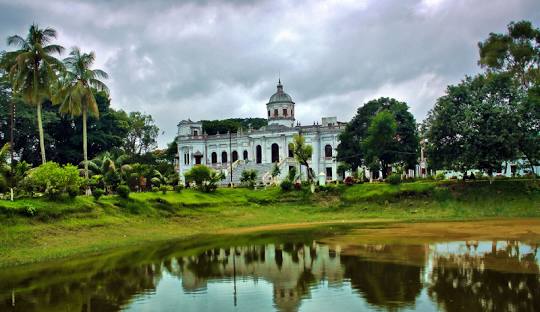
Tajhat Palace
In the quiet charm of northern Bangladesh, where lush green fields meet the blue skies, lies a regal monument that echoes the whispers of a bygone era Tajhat Palace. This hidden gem in Rangpur is not just a palace; it’s a testimony to the legacy of Bengal’s zamindari system, the influence of European architectural styles, and the enduring beauty of heritage preservation. Best Time to Visit October to March offers cooler temperatures and clear skies
A Royal Legacy: The History of Tajhat Palace
Tajhat Palace was constructed in the early 20th century, around 1908–1917, by Maharaja Kumar Gopal Lal Roy. He was a wealthy Hindu zamindar of Kashmiri descent who amassed wealth through trade and landholdings. His love for art, architecture, and grandeur led to the creation of the palace, blending classical Western design with local sensibilities.
During the partition and the political transitions of the subcontinent, the palace lost its royal residents. After 1947, like many zamindari estates, Tajhat suffered neglect and was eventually repurposed. It served as a courthouse during the 1980s and was finally restored by the government and reopened as a museum in 2005.
The Architecture: A Symphony in White
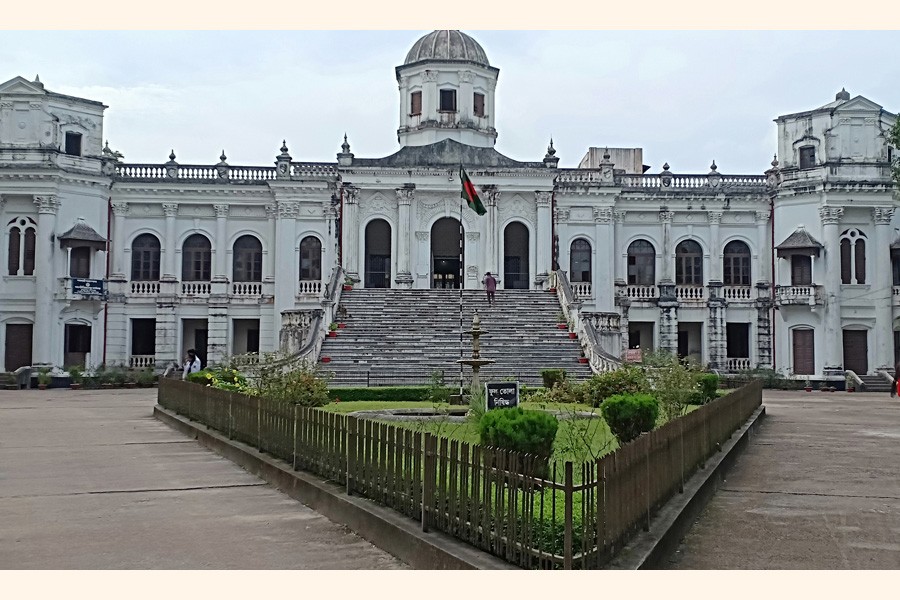
Tajhat Palace exudes elegance. The structure is primarily built with white stone and plaster, boasting neoclassical design cues tall columns, domed ceilings, triangular pediments, and symmetrical façades. The central section of the building is surmounted by a large dome, flanked by arched windows and decorated cornices.
One of its most iconic features is the broad marble staircase at the front. Imported Italian marble was used in the flooring and staircases a luxury rarely seen in South Asian palaces outside major capitals. The ornamental gardens in the front add to its visual splendor, with manicured lawns and walkways that frame the palace perfectly for photos.
Inside the Museum: A Portal to the Past
The museum is located on the ground floor of the palace. Visitors are greeted by:
🔹 Ancient sculptures of Hindu deities such as Vishnu and Durga, dating back to the 10th and 11th centuries.
🔹 Intricate metal and bronze statues reflecting Buddhist influences.
🔹 Rare palm-leaf manuscripts written in Sanskrit and Bangla.
🔹 Artifacts from the palace’s heyday, including furniture, chandeliers, mirrors, and coins.
The atmosphere is hushed and reverent, creating the perfect mood for reflection on Bangladesh’s layered cultural heritage.
Tajhat in Modern Culture:
Though not as internationally known as the Ahsan Manzil in Dhaka, Tajhat Palace is gaining attention among local and foreign tourists. Its picturesque setting and cinematic elegance have even made it a backdrop for several films and dramas.
The palace also symbolizes Rangpur’s identity and pride. Local artists, historians, and tourism boards are increasingly using it to promote cultural awareness and regional tourism.

Tajhat Palace is more than a historical building it is a symbol of transition, a meeting point between colonialism and native rule, between art and power, between the past and the present. It invites us not just to look, but to feel the stories that live within its marble walls and echoing halls.
So the next time you crave a trip that blends beauty, history, and cultural discovery consider heading north to Rangpur, where Tajhat Palace awaits like a sleeping giant, ready to share its secrets.


 2 Nights - 3 Days