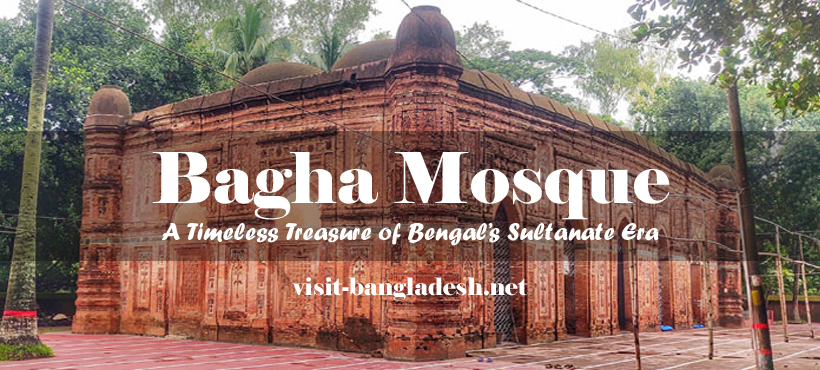
Bagha Mosque – A Timeless Treasure of Bengal’s Sultanate Era
Hidden in the quiet area of Bagha Upazila in Rajshahi, far from the busy life of big cities, stands one of Bangladesh’s most beautiful old buildings — the Bagha Mosque (বাঘা মসজিদ). This mosque, built in the 16th century, is a wonderful example of both spiritual and architectural greatness from the time of Muslim rule in Bengal. Whether you love history, enjoy peaceful places, or admire old buildings, Bagha Mosque will amaze you with its detailed artwork, calm surroundings, and rich history.
Historical Significance:
Bagha Mosque was uilt in 1523-24 AD (930 Hijri) by Sultan Nasiruddin Nasrat Shah of the Hussain Shahi dynasty, Bagha Mosque represents one of the finest surviving examples of Sultanate-era Islamic architecture in Bangladesh. At that time, Islamic culture and architecture were growing in Bengal. The Husain Shahi dynasty helped build many mosques and supported art and learning. There is a stone tablet above the east door of the mosque that tells us who built it and when. For hundreds of years, this mosque was not just a place to pray, but also a place where people came together as a community.
Architectural Features:
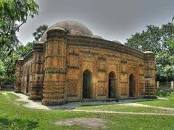
Bagha Mosque is an exquisite example of the indigenous mosque-building tradition of Bengal, which combines Islamic features with local craftsmanship and materials.
❑ Structure and Layout:
🔹 Dimensions: The mosque measures 25.1 meters in length and 11.7 meters in width.
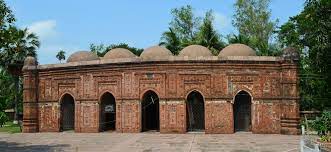
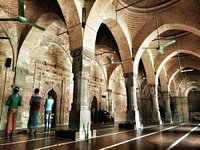
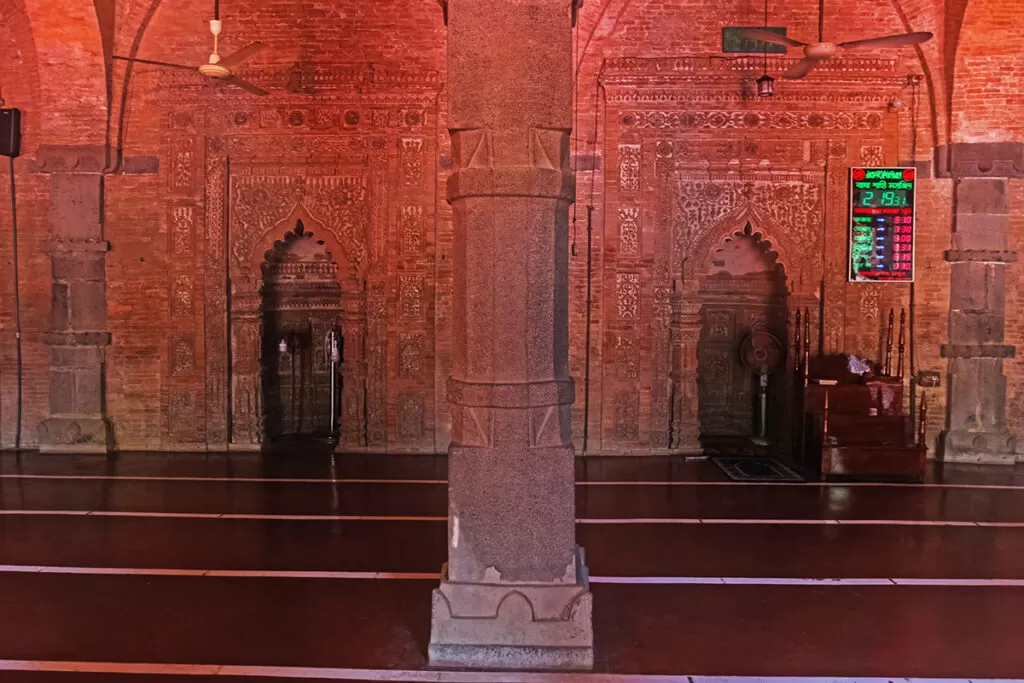
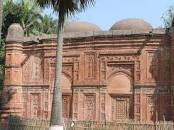
🔹 Ten Domes: Originally, the roof was covered with ten small domes arranged in two parallel rows, supported by four stone pillars and brick arches.
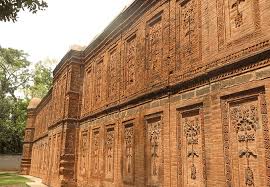
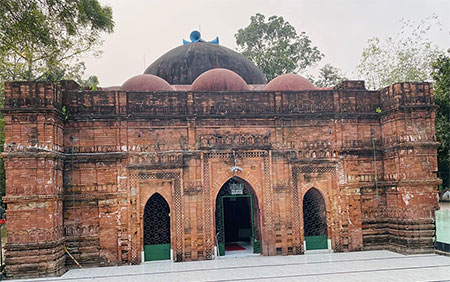
🔹 Brick Construction: Built primarily with baked red bricks, a hallmark of Sultanate architecture in Bengal where stone was scarce.
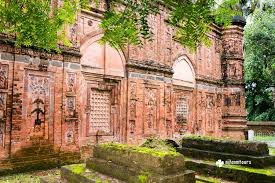
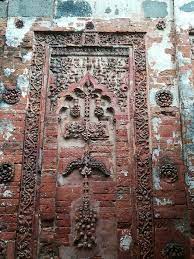
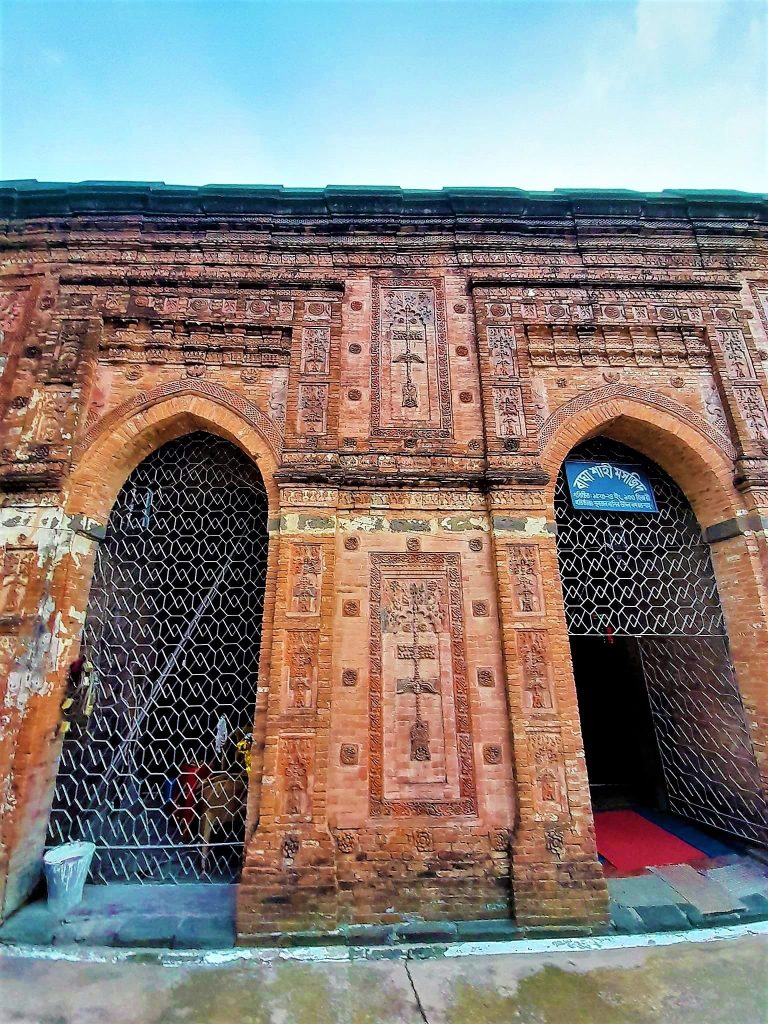
🔹 Terracotta Ornamentation: The walls are richly decorated with terracotta plaques featuring:
1) Geometric patterns
2) Floral motifs
3) Quranic calligraphy
4) Abstract arabesque designs
❑ Entrances and Mihrabs:
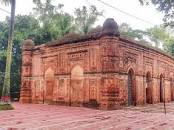
🔹 The eastern facade has five arched doorways, with three each on the northern and southern sides.
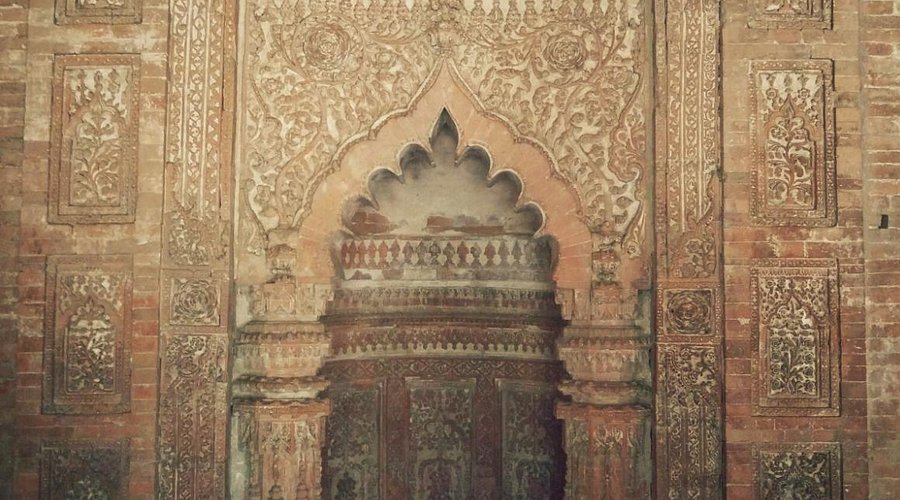
🔹 The qibla wall (western side) has five intricately designed mihrabs, aligned with the entrances.
🔹 The central mihrab is especially ornate, framed by multifoil arches and decorated panels.
❑ Towers and Corners:
Each of the four corners of the mosque is marked by cylindrical minarets or towers, ending in small domed pinnacles another common feature in Sultanate-era mosques.
Spiritual and Cultural Importance:
Adjacent to the mosque is a dargah (shrine), believed to be the tomb of a local saint, Hazrat Shah Dawlah, who is said to have contributed to spreading Islam in the region. The site is visited by pilgrims, especially during Urs festivals, which celebrate the saint’s life. The presence of the Bagha Dighi, a large pond near the mosque, adds both spiritual and practical value used historically for ablution (wudu) and water management.
Travel Tips:
🔹 Best Time to Visit: Winter (November–February) offers pleasant weather and clearer views of terracotta details.
🔹 Photography: Bring a zoom lens to capture close-up details of terracotta motifs.
🔹 Respect the Space: Modest dress is recommended, and visitors should remove their shoes when entering the mosque.
🔹 Local Delights: Try Rajshahi mangoes or sweet curd if you’re visiting in season!
Bagha Mosque isn’t just a historical monument it’s a symbol of Bangladesh’s rich Islamic heritage, architectural ingenuity, and spiritual depth. In a land where many monuments have faded with time, Bagha Mosque endures not just in brick and terracotta, but in the hearts of those who visit it



 2 Nights - 3 Days