
15 of the Most Beautiful Places in Bangladesh
Bangladesh might be one of the world’s least-visited countries, but that certainly doesn’t mean this South Asian nation is lacking in beauty.
The country is brimming with fascinating archaeological sites that reveal tales of ancient Bengal cities, mosques, Hindu temples, and Buddhist viharas. From the treasures of Old Dhaka to the vast expanses of tea country, water-bound villages painted with lilies to the Chittagong Hill Tracts and the world’s longest sea beach, there are beautiful natural and urban landscapes around every corner.
1. Sonargaon
Situated in central Bangladesh, the historic city of Sonargaon is one of the old capitals of Bengal and an important river port.
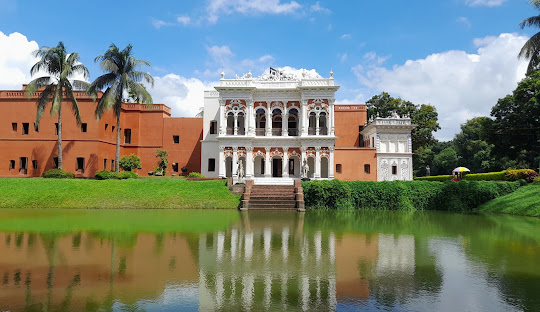
Famous for khasa, a cotton-based cloth prized for being of the finest quality, Sonargaon was once the center of muslin production and textile manufacturing. However, it is the hauntingly beautiful ruins of Panam City (known previously as Panam Nagar) that now attract visitors from around the world.
What was once the textile trading hub of the 19th century is now mostly abandoned after fires razed this thriving city to the ground. It is not known with certainty why Panam was consumed so quickly by the fires (or what started the fires in the first place), but unfortunately only a mere 52 buildings remain. Mughal monuments and fine examples of British colonial architecture retain a certain kind of haunting beauty.
There are rumors that Panam’s last remaining residents fled due to the area being haunted, leaving the old city in a fully abandoned state. Thus the once-bustling town has been nicknamed by locals as ‘City of the Dead’ or ‘Ghost City’.
2. Sylhet
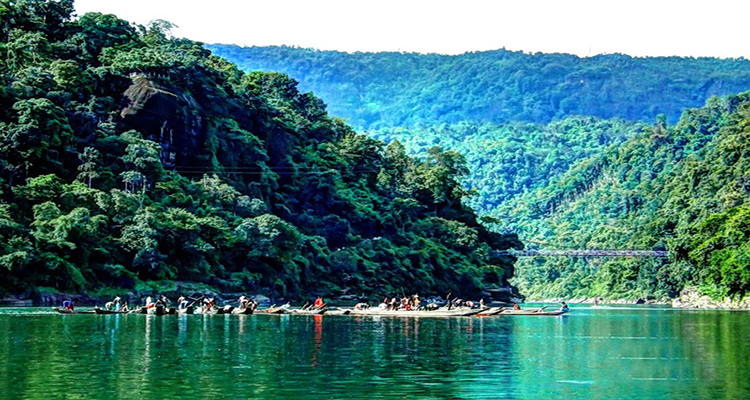
Located in the country’s far northeastern corner, Sylhet city is considered one of Bangladesh’s most important spiritual and cultural centers. The stomping ground of folk poets and chai merchants, Sylhet is also associated with verdant tea fields.
The Surma River cuts through the center of the city, with the iconic 19th-century Ali Amjad Clock overlooking the northern bank. Beyond the river and bridges, beautiful mosques dot the skyline, with the 14th-century saint Hazrat Shah Jalal being one of the most important pilgrimage sites.
The Malnicherra Tea Estate and national parks to the north give the city a perennially green backdrop. Quite incredibly, Sylhet is responsible for producing the largest amount of tea in the country.
3. Old Dhaka
Dhaka, Bangladesh’s capital city, is a bustling metropolis infamous for its traffic jams and swarming sidewalks. Its urban landscape is fascinating: modern masterpieces such as Jatiya Sangsad Bhaban, Bangladesh’s assembly building that was designed by Louis Kahn in 1982, throw the architecture in the oldest part of the city into even sharper contrast.
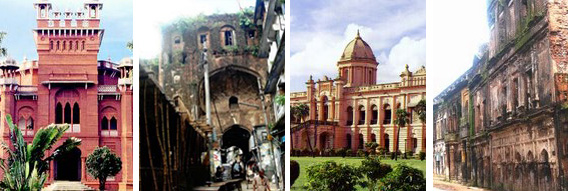
Old Dhaka is the most beautiful part of the city. It’s home to countless heritage gems, including the Mughal-era Lalbagh Fort, the 12th-century Hindu temple Dhakeshwari Mandir, and the pretty pink Ahsan Manzil Museum.
Other key landmarks in Old Dhaka, including Northbrook Hall (pictured), Ahsan Manzil, Ruplal House (a dilapidated merchant’s mansion), and the Church of the Holy Resurrection (an Armenian Apostolic church), tell the story of a storied metropolis with a far-ranging history and diverse cultural makeup.
4. Satkhira
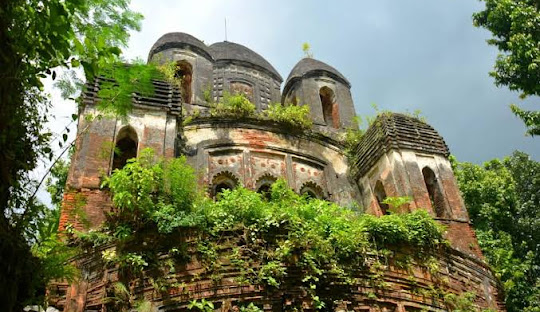
Located southwest of Bangladesh on the west Bengal and Indian border lies the district of Satkhira. It is a conglomerate of little islands formed by criss-crossing rivers, and it is well known for its pottery, bamboo and cane weaving, shrimp, and leather exports.
Satkhira is also famous for its Sundarbans, which house the world’s largest tidal halophytic mangrove forests. One of Sakkhira’s most iconic sites is the Tetulia Jami Mosque in the village of Tetulia. Built in a Mughal style in 1858–59, it features six splendid domes and minarets that reach high above the treeline.
5. Sundarbans National Park
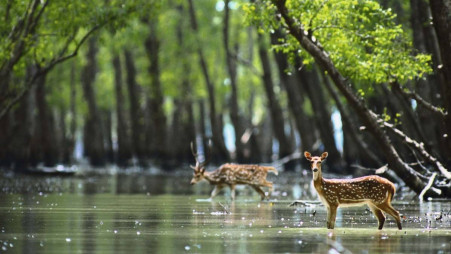
Part of the Sundarbans on the Ganges Delta and home to one of the largest Bengal tiger reserves, Sundarbans National Park is one of the most naturally productive biological ecosystems on earth. Furthermore, the Sundarbans is the largest area of mangrove forest globally and the only one inhabited by tigers.
Inscribed as a UNESCO World Heritage Site in 1987, Sundarbans, which means ‘beautiful forest’ in the local Bengali dialect, also plays an important role as a storm barrier and shore stabilizer.
There are a variety of things to see and do within the park, including wildlife tourism, visiting the Sudhanyakhali Watch Tower, Mangrove Eco Garden, and the Sangha Temple. This beautiful natural wonder in Bangladesh is guaranteed to take your breath away.
6. Sreemangal
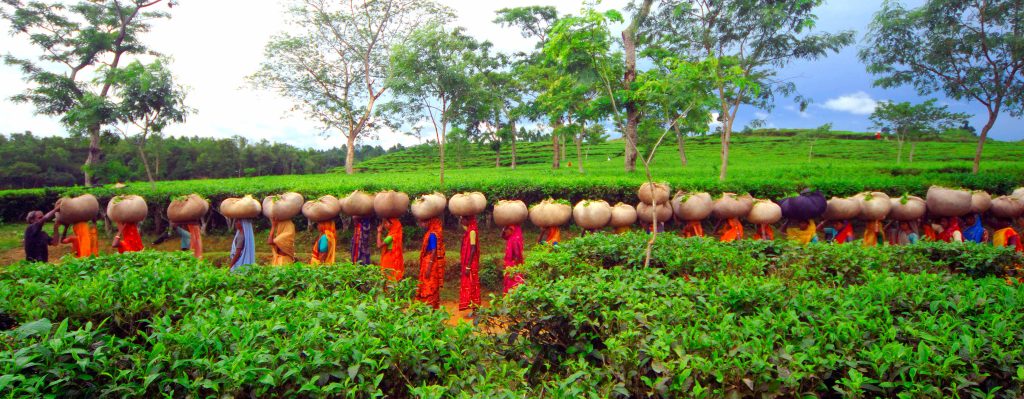
Home to more than 163 tea plantations and widely known as tea country, Sreemangal is famous for its tea gardens. Tea lovers can take tours of the plantations or even cycle around the gardens.
If you thought that tea was the only thing this beautiful place offers, think again. The Manipuri tribal village is great for a cultural experience and offers the chance to taste the locals’ favorite drinks, known as the seven layers of tea.
Nature lovers can take a trip through the Rema Kalenga reserve forest, full of endangered species, or trek through the Lawachara rainforest, one of the last tropical rainforests in Bangladesh. No matter what activity you choose, your Sreemangal visit is sure to hold a place in your heart.
7. Mahasthangarh
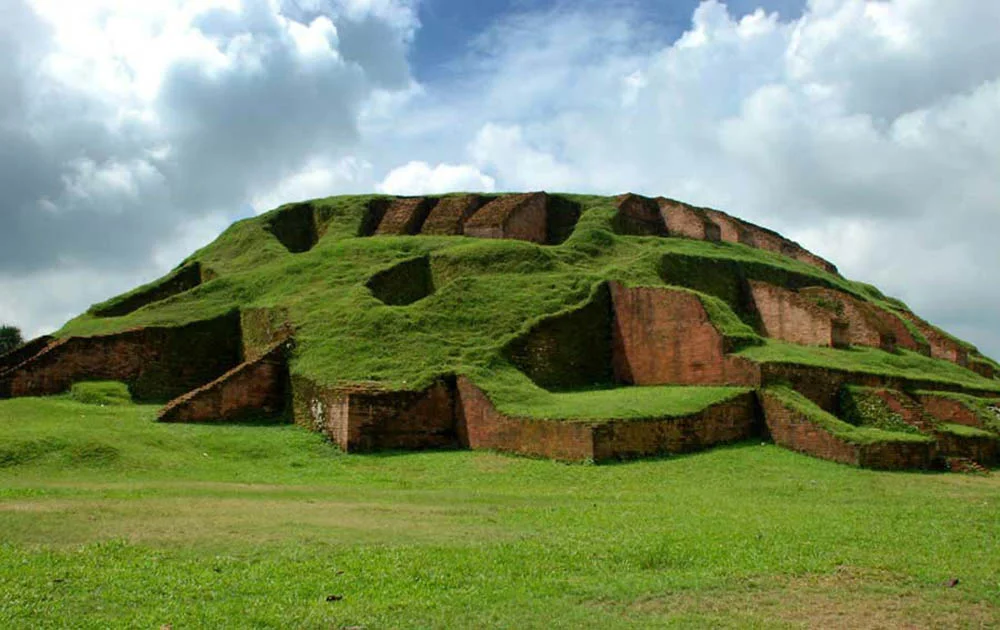
The oldest fortification and archaeological site is Mahastangarh. It served as the ancient Persian kingdom’s capital. It was constructed in the third century BC and is today revered by Muslims, Buddhists, and Hindus. The site’s antiquities, which are housed in a tastefully furnished site museum, ranged from clay items to gold jewelry and coins.
8. Cox’s Bazar
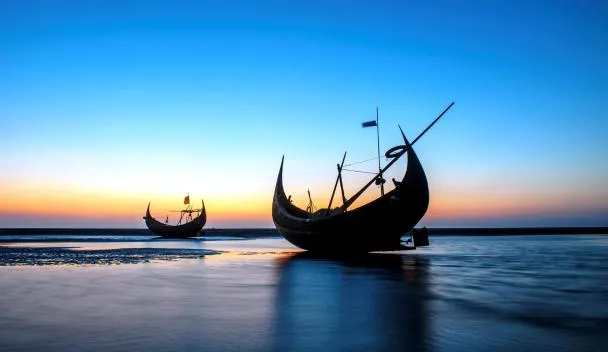
In the southeastern part of Bangladesh lies the fishing port city of Cox’s Bazar. Best known for sandy shores and seafood, Cox’s Bazar can claim the longest sea beach in the world at 120 kilometers (74.5 miles).
The seemingly never-ending stretch of sand runs into the horizon, dotted with moon-shaped Sampan boats, giving Bangladesh one of its most impressive landscapes. Horse riding on the beach, parasailing, water biking, and much more are available.
From visiting the third-largest Buddha in the world at 100 feet long to an overnight stay at the beautiful Mermaid Beach Resort, Cox’s Bazar is an absolute must when visiting Bangladesh.
9. St. Martin’s Island
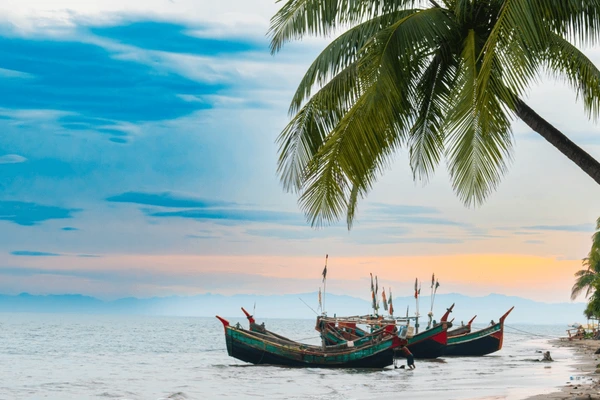
Better known as Narikel Zinzira, which means ‘coconut island’ in Bengali dialect, this is a small island in the southernmost part of Bangladesh. At only 8 square kilometers, St. Martin’s Island might be small, but it’s not insignificant: this is the only coral reef island in Bangladesh.
You can easily make a round trip of the island on foot in a day. Although the island has been without electricity since a devastating hurricane in 1991, the town survives on generators until 11pm.
St. Martin’s comes to life during the day with water sports, beach parties and twilight bonfires. Stay in a resort or camp on the beach and treat yourself to fresh coconuts and crab.
10. Barisal
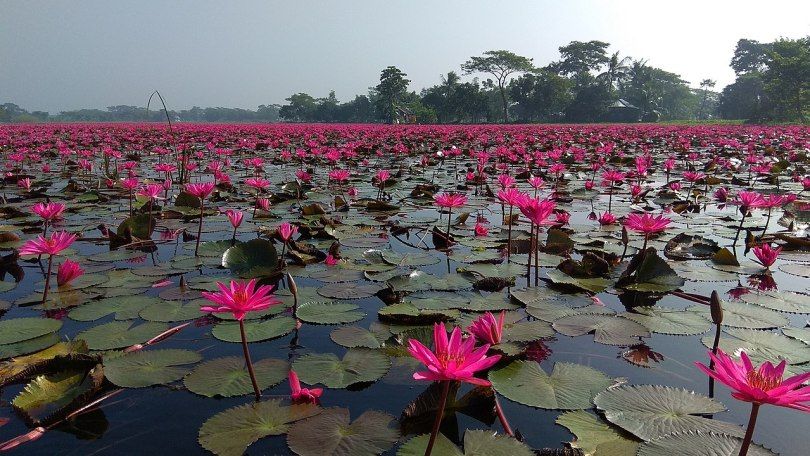
One of the oldest river ports in the country, Barisal, sometimes called the ‘Venice of Bengal’ is fast becoming one of the most popular tourist destinations in Bangladesh. The monsoon season between March and November is the best time to visit this corner of the country, where one of the most beautiful natural phenomena in the region takes place.
This is waterlily (shapla) season in the village of Satla, when the national flower of Bangladesh grows in abundance. The carpet of pink flowers blooms on the village canal and over 10,000 acres of village wetlands.
Not only are the lilies a beautiful sight, they are also extremely important to local culture and the economy. Around 70% of Satla’s residents work in lily cultivation. The stems are used in many traditional Bengali dishes and have medicinal uses too.
11. Puthia Temple Complex
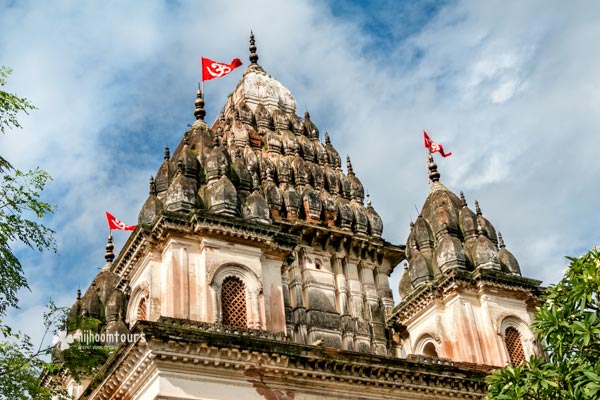
Within the Rajshahi district of Bangladesh lies the culturally rich town of Puthia. It’s home to the breathtaking Puthia Temple Complex, which holds the largest number of temples in Bangladesh within its boundaries.
All were built by Hindu Zamindars Rajas of the Puthia Raj family, who were Rajshahi’s renowned philanthropists at the time. Of all the structures in Puthia, 13 temples and one palace have been declared protected monuments.
If you have a keen interest in architecture or simply enjoy immersing yourself in history, then the Puthia Temple Complex is definitely a must-visit.
12. Rangamati
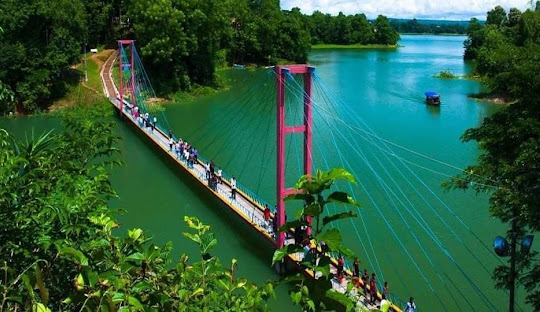
Rangamati, home of the Chittagong Hill Tracts, is a town in the southeastern part of Bangladesh on the western bank of Kaptai Lake. The man-made lake was created in 1960, and today, boat cruises are one of the most enjoyable ways to explore this area’s scenic beauty.
The Chittagong Hill Tracts are made up of rolling mountains and inhabited by 13 indigenous tribes, including the Mongolian Chakma, Tipra, Murong, and Magh, each of whom has their own culture. Alongside weaving factories and craft markets, the most sought-after attractions are the Chakma King House and Bonorupa, the largest tribal floating market.
13. Dinajpur
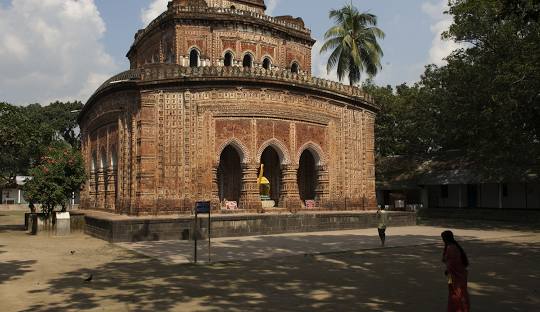
Lying on the Punarbhaba River, Dinajpur is the largest of the 16 districts in northern Bangladesh and a region that is well known for its architectural heritage. Besides being home to the famous Kantanagar Temple (Kantajir Temple), built in 1752 out of baked bricks with terracotta panels, Dinajpur is also an important area for crop cultivation, including rice, wheat, jute, and sugarcane.
The variety of attractions here is endless as well as diverse, but some of the most popular spots are the Kantajew Temple, Ramsagar National Park, Shopnopuri Amusement Park, Nayabad Mosque, and the Goddess Kali Temple.
14. Paharpur
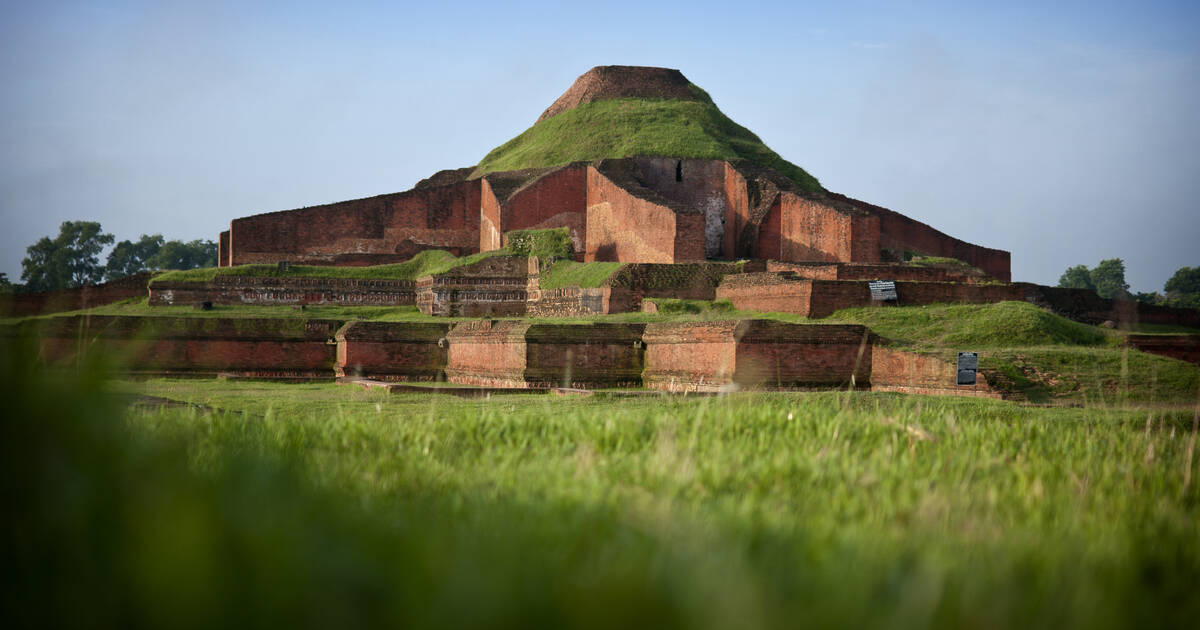
With the rise of a new form of Buddhism, Paharpur became one of the most significant intellectual centers in the region. Located in the northwest corner of Bangladesh, Paharpur is reputed to be the second-largest Buddhist monastery south of the Himalayas, with the Ruins of the Buddhist Vihara dating back to the 8th century.
It has been said that the main temple of Paharpur was used as an inspiration for some of the greatest Buddhist monuments across southeastern Asia, including the Temples of Angkor in Cambodia.
Inscribed as a UNESCO World Heritage Site in 1985 and formerly known as Somapura Mahavihara, the Ruins of the Buddhist Vihara is considered one of the most important archaeological sites in the country and is commonly cited as a key example of pre-Islamic Bangladeshi architecture.
15. Bagerhat
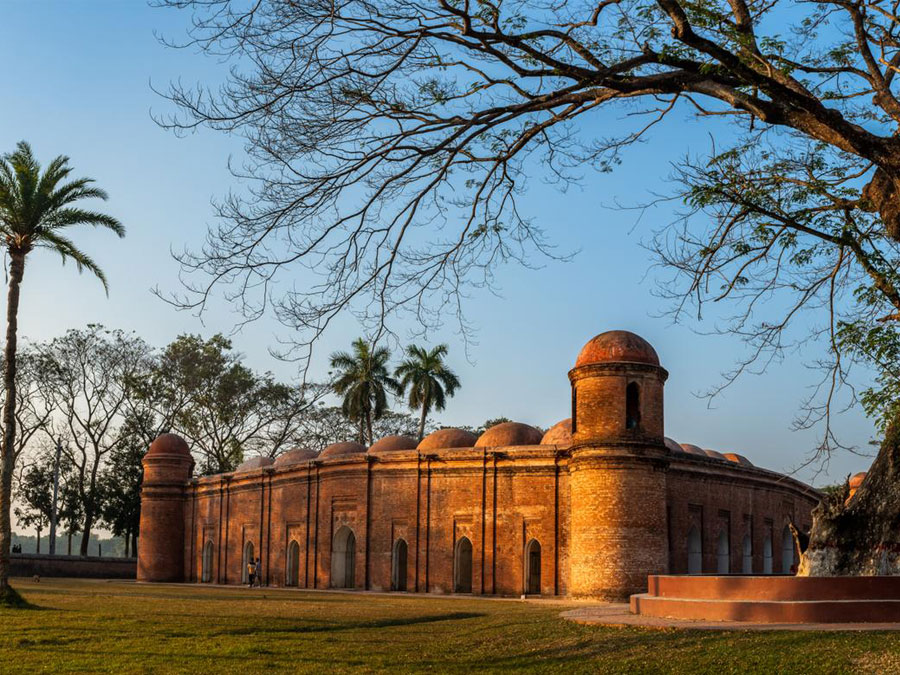
The historical town of Bagerhat, an inscribed UNESCO World Heritage Site since 1985, is situated in southwestern Bangladesh. Lying at the confluence of the Ganges and Brahmaputra rivers, the ancient town known as ‘the Mosque City of Bagerhat’ is this area’s most beautiful attraction. Formerly known as Khalifatabad, this city holds 360 mosques as well as mausoleums, bridges, water tanks, roads, and public buildings all built from baked bricks covered in terracotta artwork and arabesque designs.
From admiring the 60 domed mosques and the Singair Masjid to visiting the Bagerhat Museum, where you can learn about the legend of Khan Jahan Ali Dighi, Bagerhat offers one of the most beautiful cultural experiences for any traveler.


 2 Nights - 3 Days